-
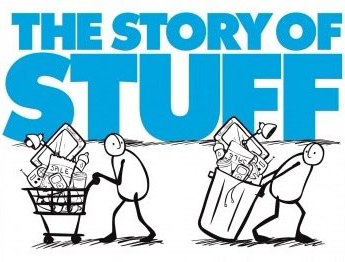
The Story of Stuff
When Annie Leonard released The Story of Stuff in 2007, few expected a short online documentary to spark a global conversation about consumption, waste, and sustainability. Today, almost two decades later, The Story of Stuff remains deeply relevant. Our planet is grappling with climate change, resource scarcity, and waste crises that are symptoms of the linear production model Leonard warned about. Yet, the growing interest in repair culture, minimalism, and zero-waste living suggests that a shift is underway. Her message that our obsession with buying and discarding things has deep consequences has resonated with millions and evolved into a movement for systemic change. At its heart, The Story of Stuff…
-
Getting the Ford Super Duty ready for off-grid use
After leaving Hartly, NSW, the Super Duty pulled our caravan up the short but steep mountain (6.75% gradient) to Lithgow without any problems, with more than sufficient power, even though I’d started loading it up. The Super Duty came standard with the steel tray, to which I added an Aussie Tonneaus Wildback canvas canopy incorporating ladder racks on which I mounted 2 x 250w solar panels. Under the canopy, I installed : I decided not to install the alternator charging kit and am still of two minds as to whether I’m going to, seeing that the Super Duty does have a trickle charge set up already, meant for the trailer/caravan…
-
Ford Super Duty – Still a happy customer
Since my last blog, after buying the Ford Super Duty just before Christmas, we have towed our 21.7‑foot caravan (around 3200 kg) with an additional 400 kg on the ute from Ballarat to the Blue Mountains (Hartley). We followed the M8 to Melbourne, then the M31 north‑east, overnighted at the Ettamogah Pub just past Albury (a great free‑camping site), then turned onto the A41 at Coolac and continued through Bathurst and Lithgow to Hartley – altogether around 900 km. Before setting off, we used the Smart Hitch to check both the ute’s payload and the tow‑ball weight, which showed 300 kg (this changed slightly once we got into the vehicle).…
-
New 2026 Ford Ranger Super Duty
We’ve used our 2007 4X4, 3-litre, 4-cylinder turbocharged 4-cylinder Nissan Patrol to tow a 21.7-foot caravan over 16,000 km (probably slightly overloaded at around 3200kg), but we always felt the Patrol was working at its limits, especially when traversing hilly country. We generally towed at around 90km/h and a lot slower in the mountains, which we usually tried to avoid. In looking to upgrade our tow vehicle, we considered what the market had to offer, from the Ram, Silverado, the new lower rated 4 cylinder Land Cruiser and even trucks, finally, with my heart still set on the discontinued V8 Land Cruiser, we decided on a 2026 Ford Ranger Super…
-
25 surprising facts about caravanning in Australia
Australia’s caravanning culture is full of quirks, records and unexpected trends that make it unlike anywhere else on Earth. From horse‑drawn vans to high‑tech off‑road rigs, here are 25 surprising facts that show just how big and distinctive caravanning is down under. Early days and hidden origins 1. Long before modern caravans, horse‑drawn travel trailers were used by Australian explorers, workers and holiday‑makers in the late 19th and early 20th centuries, blending European wagon ideas with local conditions. 2. The first purpose‑built Australian caravans began appearing in the early 1930s, with small operators like Paramount in Adelaide and others experimenting with streamlined bodies, novel layouts and even patented floor‑lowering systems.…
-
Barriers to decarbonisation in the Grey Nomad community of Australia.
Grey nomads face several practical, financial, and systemic barriers to decarbonising their travel, even though many are keen to reduce their environmental impact. The main obstacles are the high cost of low‑carbon technology, patchy infrastructure in remote areas, and the design of current RVs and travel patterns, which make it hard to switch quickly to electric or solar-powered travel. High upfront costs and limited budgets Many grey nomads are on a fixed retirement income and are cautious about making significant, one‑off expenses, which in turn makes low‑carbon upgrades difficult. Lack of charging and refuelling infrastructure The most significant practical barrier for grey nomads is the absence of reliable, fast charging…
-
Eco-Friendly Adventures: How to Be Carbon Neutral in a Caravan
Travelling carbon neutral in a caravan means reducing fuel use, minimising waste, and offsetting emissions—so your adventures leave memories, not a footprint. Caravan travel offers freedom, comfort, and a deep connection to nature, but also comes with a carbon cost. From towing fuel to campsite energy use, every kilometre adds up. The good news? With smart choices and a sustainability mindset, you can make your caravan journeys carbon neutral and even regenerative. 🌿 Step 1: Choose an Energy-Efficient Setup ♻️ Step 2: Minimise Waste and Water Use 🌍 Step 3: Offset Your Emissions Even with the best intentions, caravan travel produces emissions, primarily from fuel. Offset them by: 🛠️ Step…
-
Eco-Nomads Support Local Communities
Travelling by caravan offers a unique opportunity to immerse yourself in diverse landscapes and cultures. However, ensuring that your journey positively impacts the communities you visit is crucial. Supporting local communities while caravaning not only enriches your travel experience but also contributes to the sustainability and prosperity of these areas. Here’s how you can make a difference: Travelling by caravan provides an unparalleled sense of freedom and adventure. By making conscious choices to support local communities, you ensure that your journey not only benefits you but also leaves a lasting positive impact on the places you visit. Remember, the heart of travel is connection, and every small effort counts towards…
-
What is an Eco-Nomad?
As the detrimental effects of our consumer lifestyles inevitably emerge from the shadows, the requirement to be eco-friendly is becoming harder to ignore. All the same rules for being eco-friendly at home still apply when travelling. It’s all about making a daily switch to greener choices. You might not be out to save a rainforest, but every eco-friendly choice you make improves the environment and the local communities you visit. When travelling full-time, doing a half lap, or just for holidays, being an ECO-Nomad is easier than you think! So, what is an Eco-Nomad? Eco-Nomads make choices that will positively impact the people and the environment around them.Being an Eco-Nomad…