

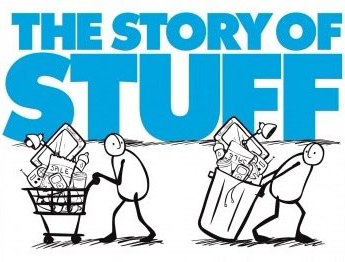
The Story of Stuff
When Annie Leonard released The Story of Stuff in 2007, few expected a short online documentary to spark a global conversation about consumption, waste, and sustainability. Today, almost two decades later, The Story of Stuff remains deeply relevant. Our planet is grappling with climate change, resource scarcity, and waste crises that are symptoms of the linear production model Leonard warned about. Yet, the growing interest in repair culture, minimalism, and zero-waste living suggests that a shift is underway. Her message that our obsession with buying and discarding things has deep consequences has resonated with millions and evolved into a movement for systemic change.
At its heart, The Story of Stuff reveals the hidden life cycle behind every product we use. From the extraction of raw materials to production, distribution, consumption, and disposal thereof, Leonard highlights how each stage relies on finite resources and generates pollution, often far from where products are sold. For example, the plastic bottle we buy for convenience represents mined oil, industrial emissions, and a toxic legacy when discarded.
For those of us travelling Australia in a caravan or campervan, her message feels especially relevant. Our home on wheels naturally invites minimalism, being smaller and simpler than traditional houses, but every piece of ‘stuff’ we have still connects to that same global chain of production, consumption, and waste.
Despite living a simpler lifestyle on the road, bad consumer habits can sneak in, such as buying single-use camping gear or upgrading electronics before the old ones fail. Leonard’s framework reminds us that sustainability isn’t just about recycling as we go, it’s about rethinking what we truly need for life on the road.
Take solar systems, for example. Many travellers have invested in panels, batteries, and inverters to stay off-grid. Choosing durable, repairable components rather than disposable tech reflects the Story of Stuff’s principle of purchasing for the long term, valuing quality and lifecycle over convenience. The same applies to water filters, cooking tools, and clothing. When each item is selected thoughtfully, cared for, and maintained well, it tells a different story, one of respect for resources and independence from wasteful systems.
The Grey Nomad and Vanlifer communities are uniquely positioned to shift toward sustainable travel. By sharing repair tips, swapping second-hand gear, and designing tours that leave no trace, these travellers can embody the shift Leonard envisioned, from ownership to stewardship. A sustainable caravan journey isn’t just about the fuel we save or the solar watts we generate. It’s about cultivating awareness that our ‘stuff’ has roots and consequences that reach far beyond the outback.
As we roll across Australia’s vast landscapes, The Story of Stuff invites us to see our journey not only as an escape from the world’s problems, but also as an opportunity to rewrite our relationship with them. Every reused container, every recycled bottle, and every repaired appliance tells a story of care — and together, those stories add up to a mobile movement that honours both freedom and the Earth.


